
7 Steps to Finding the Right Colorado Springs Tattoo Shop
Last Updated: October 25, 2026
Quick Summary
Finding the right Colorado Springs tattoo shop starts with your tattoo idea, not a studio list: write down the style, placement, and size in centimeters first. Then match your style to an artist specialty, verify the shop's establishment license and artist registration, and ask about healed work, deposits, and touch-up policies before booking.
Write down your style, placement, and size in centimeters before you start comparing studios.
Scan portfolios for about ten pieces in the same style and favor healed photos over fresh ones.
Ask to see the establishment license and the artist's registration, and treat an expired license as a hard stop.
Request the autoclave spore test log from the last month and a specific EPA-registered disinfectant.
Weekday afternoons are the quietest window for walk-ins; book ahead for custom work and cover-ups.
Table of Contents
How to Read Tattoo Artist Portfolios for Consistent, Healed Work
A Practical Safety and Licensing Checklist for Any Colorado Springs Tattoo Shop
Walk-In Tattoo Shops in Colorado Springs: When They Work and When to Book
Realistic Pricing and Budgeting for a Colorado Springs Tattoo Shop
Tattoo Aftercare Instructions That Protect the Work You Paid For
Start With Your Tattoo Idea, Not the Shop List
Finding the right Colorado Springs tattoo shop starts with your idea, not a list of studios. The U.S. tattoo studio industry reached $1.4 billion in market size in 2026 across 21,573 businesses, according to IBISWorld's tattoo studio industry analysis, so you have options. That volume makes matching harder, not easier.
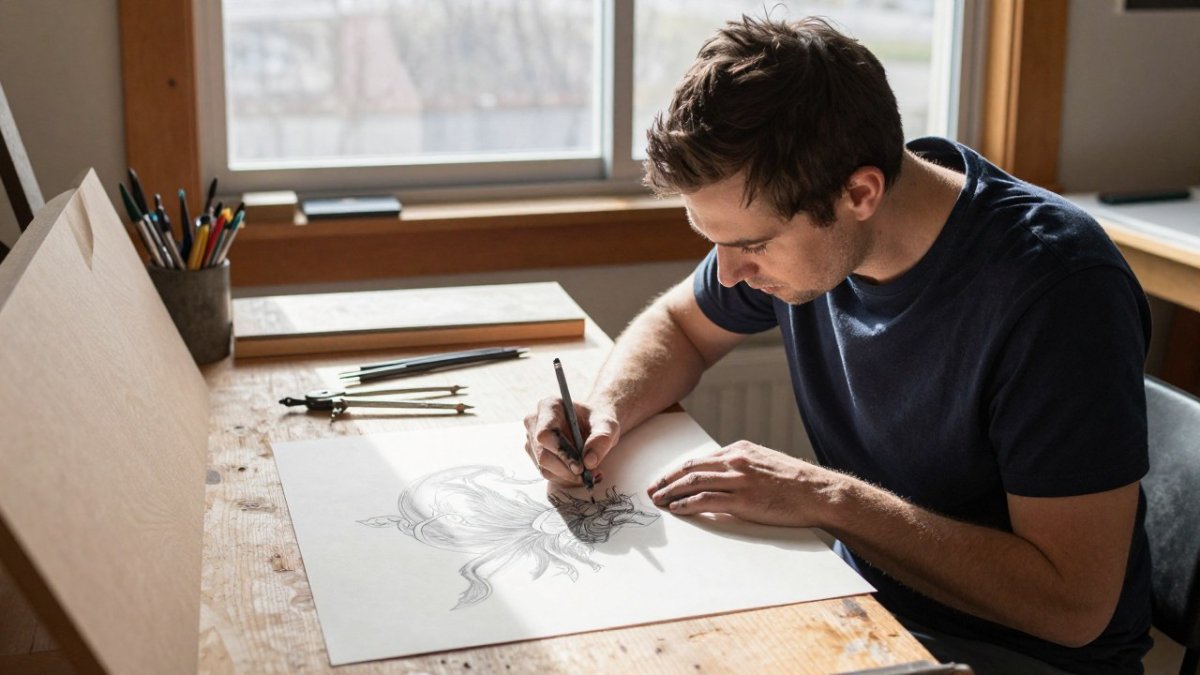
Skip that. Write down three things first: the style, the placement, and the size in centimeters. A fine line piece on a rib cage and a realism sleeve are different projects that need different artists.
If you're still shaping the idea, browsing flash designs can help you see what's possible before you commit.
How to Read Tattoo Artist Portfolios for Consistent, Healed Work
A tattoo artist portfolio is a curated collection of completed work that shows an artist's range, consistency, and healing results. Read it for healed photos first, not fresh ones. Fresh tattoos always look sharp. Healed work reveals whether lines stayed crisp and saturation held.

Here's what most guides miss: consistency matters more than a single showstopper piece. Scan a portfolio for ten pieces in the same style. You can practice on Tomas's portfolio to see how healed, consistent work reads. If eight look strong and two look shaky, that's a warning sign.
Matching Your Style to an Artist Specialty
Style matching is the single biggest predictor of whether you'll love the result. American Traditional, fine line, black and gray, realism, and custom work each demand different muscle memory. An artist who excels at bold traditional linework may not be your best choice for delicate fine line detail. Check the guest artist lineup to see whether a visiting specialist matches your style.
Ask directly: "How much of your weekly work is this style?" An artist who does your style daily will produce more consistent results than one trying it occasionally.
A Practical Safety and Licensing Checklist for Any Colorado Springs Tattoo Shop
Safety and licensing checks take five minutes and tell you more than any review. Most guides list hygiene basics and stop there. The gap is verification: knowing what to ask, what to look for, and which answers should end the conversation.
Start with the license. Tattoo establishments in this state operate under a body-art establishment license issued through the state health department, and artists hold individual body-artist registrations. Ask to see both. A current establishment license should be posted where clients can see it; if it isn't, ask. The license number and expiration date are the two things to check, an expired license is a hard stop.
Then move to the station. Use this checklist on every shop you visit:
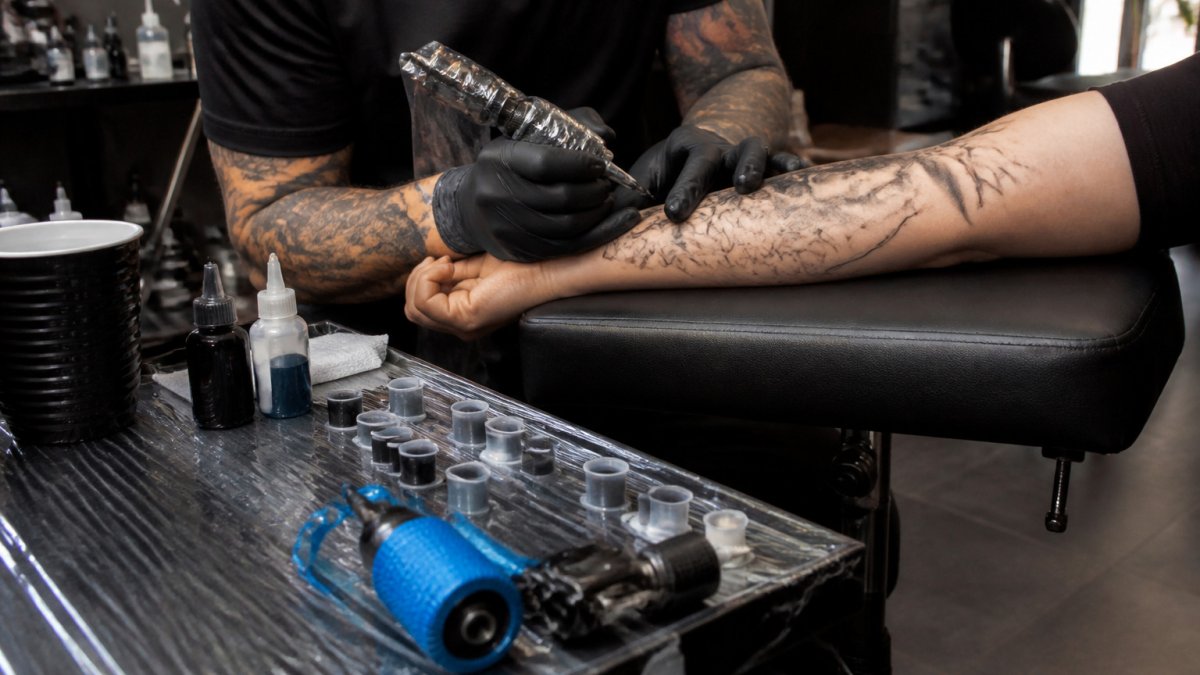
Single-use needles opened in front of you, from sealed packaging
Autoclave with visible spore test logs, ask to see the most recent one
Artist wears fresh gloves and changes them mid-session
Workstations wiped down between clients with an EPA-registered disinfectant
Sharps disposed of in labeled biohazard containers
Establishment license displayed and current
Artist registration current and verifiable
Artist can explain cross-contamination protocol in plain language
Watch Out A spotless front counter means nothing if the back room is cluttered. Ask to see the station setup before you commit. A shop that hesitates to show you the autoclave log or the sharps container is telling you something.
The questions that separate a compliant shop from a clean-looking one:
"Can I see your autoclave spore test log from the last month?" Spore testing is the only way to confirm the autoclave actually sterilizes; a shop that runs one should have logs on hand.
"How do you handle a needle stick?" A prepared shop has a written exposure-control plan and can describe it.
"What disinfectant do you use on stations between clients?" The answer should be a specific EPA-registered product, not "we wipe everything down."
"Where do you store unopened supplies?" Supplies stored in a bathroom or unsealed cabinet are a red flag.
"Can I see the aftercare sheet you send clients home with?" Written aftercare instructions are a sign the shop treats healing as part of the service.
If you want to verify details with a specific shop, you can contact the studio directly and ask for the license number before you book. Five minutes of verification beats a healed piece you have to cover up.
What Tattoo Consultation Questions to Ask Before You Book
A tattoo consultation is a short meeting where you and the artist review your idea, placement, size, and timeline before any deposit changes hands. Come with questions. The best ones:
Can you show me healed photos of similar work?
How will this design age in ten years?
What's your touch-up policy?
How many sessions will this take?
What's the deposit and cancellation policy?
That last one matters. Get the answer in writing. When you're ready, you can book online and skip the phone tag.
Walk-In Tattoo Shops in Colorado Springs: When They Work and When to Book
Walk-in tattoo shops in Colorado Springs work well for small pieces, flash designs, and simple linework. Book ahead for custom work, large pieces, cover-ups, or anything requiring design time.
Weekday afternoons are the quietest window for walk-ins. Weekends and evenings fill fast. Call ahead even for walk-ins; a shop that answers honestly about wait times is a shop that respects your schedule.
Realistic Pricing and Budgeting for a Colorado Springs Tattoo Shop
Pricing depends on size, detail, placement, and artist time, so ask each shop for a quote rather than assuming a number. Some shops publish starting rates; Art In Motion Tattoos lists $85-$100 as a starting rate, per the shop's tattoo FAQ, though that figure doesn't explain what drives the final price.
Here's the mechanism most guides skip. A shop's minimum, often the price of the smallest piece it will take, covers setup, sterilization, and the artist's time regardless of design size. Above the minimum, most artists price by the hour, and the hourly rate reflects experience and demand, not just speed. A large piece with dense detail takes more hours, so the estimate scales with session time. Placement matters because some areas are slower to work on and harder to keep clean during healing.
Pro Tip Treat any online estimate as a starting point, not a quote. The only number that counts is the one you get in a consultation after the artist has seen your reference, placement, and size.
Budget beyond the tattoo itself:
Deposit. Most shops require a non-refundable deposit to hold the appointment, often applied to the final price. Confirm the amount and whether it transfers if you reschedule.
Tip. Tipping is customary in the U.S. and typically runs 15-20% of the tattoo price for good work.
Aftercare supplies. Expect to buy fragrance-free soap, ointment, and possibly a barrier film, a small but real line item.
Second session or touch-up. Large pieces often need more than one session, and touch-up policies vary. Ask whether touch-ups are free, discounted, or charged at full rate, and for how long.
Cost Factor | What Drives It | How to Budget |
Shop minimum | Setup and sterilization time | Ask what the minimum covers |
Hourly rate | Artist experience and demand | Get a per-session estimate |
Size and detail | Hours of work required | Request a range, not a single number |
Placement | Difficulty and healing demands | Discuss before deposit |
Deposit | Holds the appointment | Confirm refund and transfer policy |
Tip | Customary 15-20% | Factor into total cost |
Aftercare | Supplies and follow-up | Set aside a small buffer |
Touch-up | Policy varies by shop | Confirm in writing |
A common mistake is spending the entire budget on the first session and having nothing left for a touch-up. Set aside a buffer before you book, and ask the artist to walk you through the full expected cost, deposit, sessions, tip, and aftercare, in one conversation. That's the number to budget against, not the starting rate on a website.
Tattoo Aftercare Instructions That Protect the Work You Paid For
Tattoo aftercare instructions are the cleaning and protection steps you follow for the first two to four weeks after a session. Follow them exactly; poor aftercare ruins good work faster than a bad artist.
Wash gently with fragrance-free soap, pat dry, and apply a thin layer of recommended ointment. Avoid soaking, direct sun, and picking scabs. Ratings help narrow the field, but they don't replace aftercare diligence; Yelp's Colorado Springs listings show shops ranging from 4.4 to 4.6 stars, per Yelp's local tattoo shop results, which tells you most established shops clear a decent bar.
Frequently Asked Questions
How do I choose the right tattoo artist for my style?
Match the artist's portfolio to your idea before anything else. If you want fine line or realism, look for healed close-ups, not just fresh photos, and check that linework stays crisp and shading stays smooth. Ask who in the shop handles your specific style, then book a consultation to confirm they understand your design. A Colorado Springs tattoo shop with several artists should point you to the right specialist rather than assigning whoever is free.
What should I look for in a tattoo shop's safety practices?
Look for single-use needles opened in front of you, fresh gloves, and a clean, well-lit station. Ask how tools are sterilized and whether the shop uses an autoclave with regular spore testing. A professional Colorado Springs tattoo shop will answer these questions without hesitation. Licensing and inspection records should be available on request, and any shop that dodges the topic is a reason to walk away.
Are walk-in tattoo shops in Colorado Springs a good choice?
Walk-ins work well for smaller pieces, simple designs, and flash art, and they let you meet artists without a long wait. Larger custom work, cover-ups, and detailed realism usually need a scheduled session so the artist can plan the design. Call ahead to check availability and wait times. Many shops welcome walk-ins but still recommend booking for anything that needs more than an hour in the chair.
What should a shop explain about tattoo aftercare instructions?
A good shop walks you through aftercare before you leave, not after. Expect clear guidance on washing, moisturizing, sun exposure, and when to stop using a bandage, plus what normal healing looks like versus signs of infection. Ask about touch-up policies too. Tattoo aftercare instructions should be specific to your placement and size, so treat a generic handout with suspicion.
The hardest part isn't finding a shop. It's matching your idea to the artist who will execute it well and guide you through aftercare without cutting corners. At Skin Evolution Tattoo, we offer a team of up to six artists covering fine line, realism, traditional, and custom work, walk-ins and appointments in downtown Colorado Springs, and personalized guidance from consultation through healing. Get started with Skin Evolution Tattoo and book a consultation that puts your idea first.
Comments